An in-depth analysis of the recent mid-air collision over the Potomac River involving an American Eagle regional jet and a U.S. Army Black Hawk helicopter, exploring the incident's details, rescue operations, and its broader implications on aviation safety.
Mid-Air Collision Over the Potomac River: A Comprehensive Analysis
On the evening of January 29, 2025, a tragic mid-air collision occurred over the Potomac River near Washington, D.C. An American Eagle regional jet, en route to Ronald Reagan Washington National Airport, collided with a U.S. Army Black Hawk helicopter during its final approach. The impact caused both aircraft to plunge into the icy waters below, triggering an extensive search-and-rescue operation.
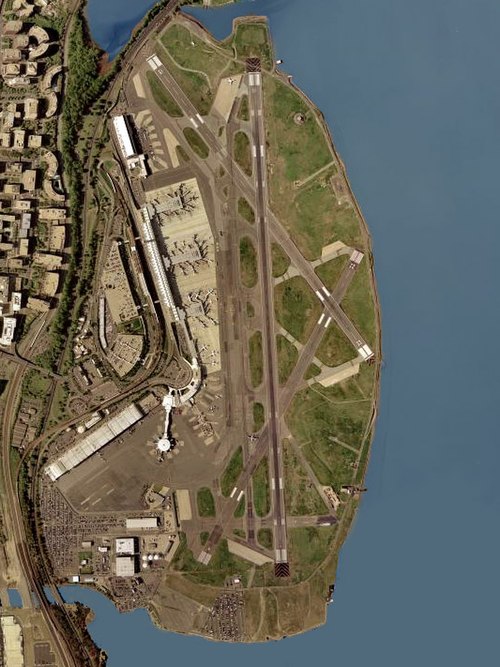
Ronald Reagan Washington National Airport, April 2002. Source: United States Geological Survey (USGS) / Public domain
Flight Path and Collision Details
The American Eagle flight had departed from Wichita, Kansas, and was nearing Reagan National Airport. The airspace surrounding the airport is a high-traffic zone, with military aircraft frequently conducting training exercises at nearby Joint Base Anacostia-Bolling.
As the jet descended for landing, it entered the same airspace where a U.S. Army UH-60 Black Hawk was conducting routine maneuvers. The collision occurred at low altitude, raising concerns about whether the aircraft collision avoidance systems were functioning properly at the time.
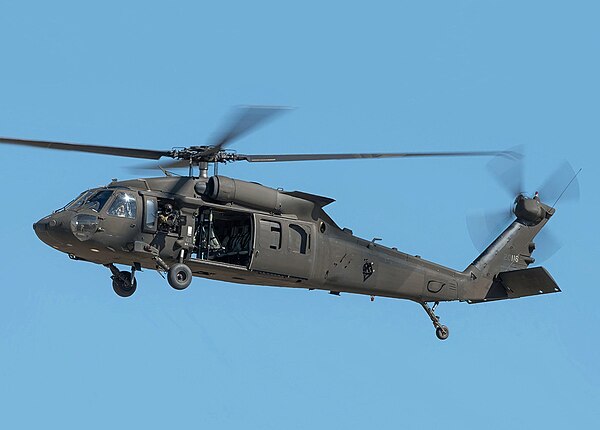
A U.S. Army UH-60M Black Hawk in operation. Source: 147th Aviation Regiment / Public domain
Rescue Operations and Immediate Response
Emergency response teams, including units from the National Transportation Safety Board (NTSB) and the Federal Aviation Administration (FAA), were dispatched immediately. The primary focus was on locating and rescuing survivors from the freezing river, where water temperatures were recorded at 35°F (1.6°C).
The challenging rescue efforts were further complicated by nighttime conditions and strong currents. Divers and emergency personnel worked through the night, battling low visibility and frigid waters, in a race against time.
Weather Conditions at the Time of the Incident
At the time of the collision, weather conditions were relatively stable. The air temperature was in the low 40s°F (5-6°C), with winds blowing from the west-northwest at approximately 10 mph (16 km/h).
While these conditions were not extreme, the cold water temperature posed an immediate danger. At 35°F, a person can lose hand function within three minutes, and unconsciousness can occur within 15–30 minutes due to hypothermia.
Impact on Transportation and Public Services
The incident caused significant disruptions to air and ground transportation in the Washington, D.C. area:
- Flight Operations Suspended: Reagan National Airport temporarily halted all inbound and outbound flights to facilitate emergency operations.
- Public Transit Adjustments: The Washington Metro deployed additional Silver Line trains to accommodate displaced travelers.
- Emergency Support: WMATA provided warming buses near the crash site to assist first responders and any evacuated passengers.

The Potomac River watershed. Source: Kmusser / CC BY-SA 3.0
Historical Context: The 1982 Air Florida Flight 90 Crash
This tragic event draws comparisons to the 1982 Air Florida Flight 90 crash, in which a Boeing 737 struck the 14th Street Bridge and fell into the Potomac River shortly after takeoff from Reagan National Airport. That disaster resulted in 78 fatalities and led to major safety improvements in aviation procedures.
Both incidents highlight the challenges of operating in high-traffic airspace over a densely populated area. The lessons from past accidents continue to shape aviation safety policies today.
Ongoing Investigation and Future Implications
The NTSB and FAA have launched an in-depth investigation into the causes of this collision. This will include:
- Analyzing flight data recorders from both aircraft
- Evaluating the effectiveness of collision avoidance systems
- Reviewing air traffic control communications
Such investigations are thorough and often take months to complete. The findings could lead to changes in air traffic management and aviation safety protocols.
Public and Political Reactions
The collision has sparked widespread concern across social media, with eyewitnesses sharing their accounts. Lawmakers, including Senator Ted Cruz, have also weighed in, stating that they are closely monitoring the investigation.
The event has reignited discussions on aviation safety, particularly regarding operations in mixed-use airspace where commercial and military aircraft operate in close proximity.
Conclusion
This mid-air collision over the Potomac River serves as a stark reminder of the complexities involved in modern aviation. As the investigation unfolds, it is essential to support those affected and reassess safety measures to prevent similar tragedies in the future.
Image Credits
- Ronald Reagan Washington National Airport – United States Geological Survey (USGS) / Public domain
- Potomac River Watershed Map – Kmusser / CC BY-SA 3.0
- UH-60M Black Hawk Helicopter – 147th Aviation Regiment / Public domain
Comments
Post a Comment