Discover the rise of same-sex marriage in Asia and beyond. Explore economic, social, and legal factors shaping LGBTQ+ rights worldwide.
🌏 The Rise of Same-Sex Marriage in Asia: Economic and Social Shifts
Same-sex marriage has been a hot topic of discussion globally, with significant advancements in legal recognition, social acceptance, and economic influence. While the West paved the way for LGBTQ+ rights, Asia is now stepping into the spotlight, driven not just by social movements but also by compelling economic incentives.
📈 The Economic Power of the LGBTQ+ Market
The economic influence of LGBTQ+ consumers cannot be overlooked. As of 2021, the purchasing power of the LGBTQ+ market in the United States alone was estimated at an astonishing $1.4 to $2 trillion USD. Similarly, Asia's LGBTQ+ tourism market has been rapidly growing, reaching a $16 billion USD valuation.
Unlike heterosexual couples, same-sex couples are statistically more likely to be dual-income households with fewer children, leading to higher disposable income. Studies indicate that LGBTQ+ consumers spend approximately 10% more than their heterosexual counterparts, with notable spending in lifestyle, travel, and cultural products.
🏳️🌈 The Evolution of Same-Sex Marriage in the U.S. and Europe
The fight for marriage equality in the United States gained traction in the 1990s, with early milestones in states such as Vermont and Hawaii, each adopting different approaches to recognizing same-sex unions. The Supreme Court's landmark 2015 ruling in Obergefell v. Hodges ultimately legalized same-sex marriage nationwide.
Europe followed a similar trajectory, with countries like Spain leading the way in legalizing same-sex marriage early on. Social attitudes evolved alongside legal changes, paving the way for broader acceptance across the continent.
🇹🇼 Taiwan and 🇳🇵 Nepal: Pioneers in Asia
Asia has traditionally been viewed as conservative, but recent developments indicate a shift. Taiwan became the first Asian country to legalize same-sex marriage in 2019, setting a precedent for other nations. In 2023, Nepal's Supreme Court ruled in favor of same-sex marriage recognition, further highlighting the region's evolving stance on LGBTQ+ rights.
Meanwhile, India has seen significant legal debates, with the Supreme Court addressing the issue, although a final verdict on nationwide legalization has yet to be reached.
🇮🇩 Opposition in Indonesia
Not all Asian countries have embraced change. Indonesia, known for its conservative policies, passed a law criminalizing extramarital sex, indirectly affecting same-sex relationships. The influence of religious and political forces continues to shape the nation’s stance, reinforcing traditional views and limiting LGBTQ+ rights.
💰 Economic Motivations Behind Legal Changes
Thailand serves as a prime example of how economic interests play a crucial role in driving social change. With same-sex marriage becoming legal in 2024, Thailand stands to attract 4 million additional tourists, generating significant revenue and positioning itself as a leader in LGBTQ+ tourism within the ASEAN region.
As the phrase goes, "money makes the world go round," and the concept of the "pink economy" reflects this reality. Businesses are recognizing the substantial financial potential of LGBTQ+ consumers, prompting governments to reassess their policies.
📊 The Rise of the Pink Economy in Asia
The competition to attract LGBTQ+ travelers and consumers is heating up across Asia. Countries like Vietnam are witnessing growing public support for same-sex marriage, with 65% of citizens in favor, signaling a potential policy shift in the near future.
With Thailand setting an example of economic success, other Asian nations may follow suit to capitalize on the lucrative pink economy. The trend suggests that economic logic, rather than cultural shifts alone, is driving policy changes across the region.
🔍 Conclusion
The legalization of same-sex marriage in Asia is not just a matter of social justice; it is also an economic opportunity. As LGBTQ+ consumer power continues to grow, governments and businesses alike are recognizing the benefits of inclusion.
Understanding the evolving landscape of same-sex marriage requires a keen eye on both cultural and economic factors. The progress seen in Taiwan, Nepal, and Thailand marks a turning point for LGBTQ+ rights in Asia, with more countries expected to follow suit in the years to come.
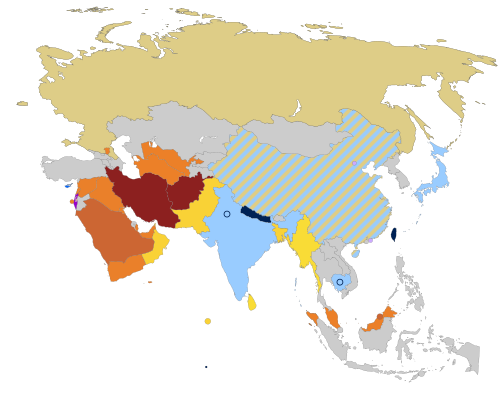
Image Credit: Public Domain, LGBT Rights in Asia
Comments
Post a Comment