SpaceX's Vision for the Future: Revolutionizing Rocket Technology with Raptor Engines
Introduction: SpaceX's Bold Vision for Humanity's Future in Space
SpaceX, founded by Elon Musk, has always had a groundbreaking vision: to make humanity a multi-planetary species. Their ambitious goals include reducing the cost of space travel, pioneering reusable rocket technology, and, most significantly, enabling human colonization of other planets, such as Mars. In this post, we will delve into SpaceX's current advancements, particularly the development of the Raptor engine, a key element in achieving their mission of space exploration and human expansion beyond Earth.
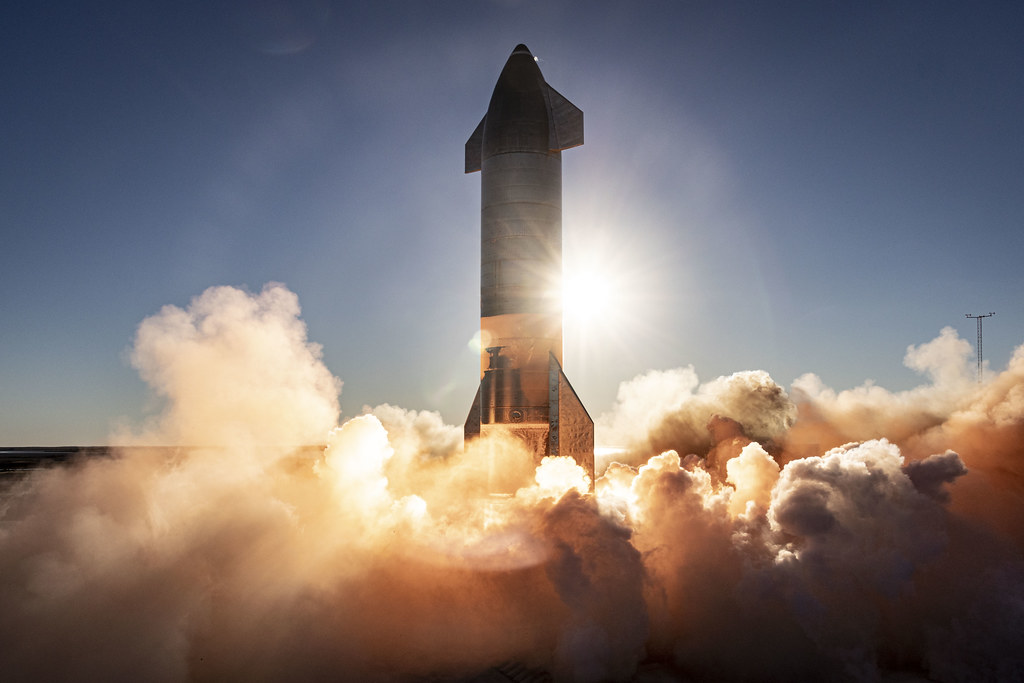 |
| copyright by Official SpaceX photos CC BY-NC |
SpaceX's Vision: Paving the Way for a Multi-Planetary Future
SpaceX’s overarching mission is to push the boundaries of what is possible in space technology. From reducing the cost of space missions to developing the most powerful rockets in history, their goal is clear: to make life interplanetary. The path forward involves significant innovations in rocket engines, such as the development of Starship, the world’s largest rocket designed for interplanetary travel. At the core of this advancement is the Raptor engine, a revolutionary piece of technology that is set to change the future of space exploration.
The Evolution of Rocket Engines: From Merlin to Raptor
The Merlin Engine: A Stepping Stone
SpaceX’s journey toward advanced rocket engines began with the Merlin engine, the first engine designed by the company. The original Merlin engine provided a thrust of 340 kilonewtons and had an efficiency (specific impulse) of 261 seconds. While the engine was relatively simple and easy to produce, its efficiency was far from optimal. Over time, SpaceX continued to iterate on the Merlin engine, eventually developing the Merlin 1D, which powers the Falcon 9 rocket. With 845 kilonewtons of thrust and 348 seconds of specific impulse, the Merlin 1D became a cornerstone of SpaceX’s launch capabilities.
Raptor Engines: Powering the Starship Rocket
The development of the Raptor engine marks a significant leap forward for SpaceX’s ambitions. Initially announced in 2011, the Raptor engine was designed to use methane as fuel, offering several advantages over traditional rocket fuels like RP1. By utilizing a full-flow staged combustion cycle, the Raptor engine delivers exceptional efficiency, setting it apart as one of the most advanced rocket engines in the world.
How Rocket Engines Work: The Core Principles
The Basics of Rocket Propulsion
At the heart of any rocket engine lies the basic principle of action and reaction. By expelling a significant amount of mass at high speed in the opposite direction, a rocket generates thrust. The key to efficient propulsion lies in high-pressure combustion that rapidly expels gas through the engine nozzle.
The Importance of Fuel and Oxidizer
In rocket engines, fuel and oxidizer are combined in the combustion chamber under extremely high pressure. This controlled explosion creates a force that propels the rocket forward. The efficiency of this process is measured by the specific impulse, which is influenced by the exhaust velocity and the design of the engine.
Innovative Technologies Behind the Raptor Engine
Dual Turbo Pumps and Closed-Cycle Design
The Raptor engine features dual turbo pumps that feed the propellants—liquid methane and liquid oxygen—into the combustion chamber. One pump feeds more oxygen, while the other pumps more methane, optimizing combustion. This setup is coupled with a closed-cycle design, which prevents fuel waste and maximizes efficiency.
Revolutionary Fuel: Liquid Methane
The choice of liquid methane as a fuel for the Raptor engine is strategic. Compared to RP1 (refined kerosene), methane offers better efficiency and is more manageable than hydrogen. Moreover, methane can potentially be produced on Mars, making it an ideal fuel for long-term space exploration.
The Advantages of Methane Fuel
- Higher efficiency than RP1
- Easier to handle than hydrogen
- Mars-based production potential for future colonization
The Future of Rocket Engines: Continuous Innovation
The Evolution of the Raptor Engine
The Raptor engine has undergone significant evolution since its inception. The first iteration provided 185 tons of thrust and weighed 2,000 kg. With each subsequent version, SpaceX has refined the design, improving both thrust and weight. The Raptor 2 increased thrust to 230 tons while reducing weight by 400 kg, and the Raptor 3 boosted thrust further to 280 tons, making it even more efficient. The design philosophy of "The best part is no part" focuses on reducing complexity by eliminating unnecessary components.
SpaceX's Design Philosophy: Streamlining for Efficiency
SpaceX’s approach to rocket design has always been about simplicity and efficiency. By integrating components and reducing the number of parts, they have minimized the potential for failures. The active cooling systems in Raptor 3 ensure that the engine stays at optimal temperatures during operation, further increasing its lifespan and reliability.
Looking Ahead: SpaceX's Ambitious Goals
SpaceX’s Raptor engine is a crucial part of their vision for the future of space exploration. With plans for the Starship rocket, which will use Raptor engines for interplanetary missions, the company is on track to meet Elon Musk’s ambitious goals. As they continue to push the limits of rocket technology, their work on the Raptor engine exemplifies SpaceX’s commitment to making the impossible possible.
Conclusion: The Future of Space Exploration is Bright
In conclusion, SpaceX’s innovative approach to rocket technology, particularly through the development of the Raptor engine, is paving the way for humanity's future in space. As they continue to refine and improve their designs, the possibilities for interplanetary travel are becoming more realistic. The next steps for SpaceX involve scaling up production and testing to bring us closer to a future where humans can live and thrive beyond Earth.
Comments
Post a Comment