The Golden Age of the Middleman: Exploring the Essential Role in Modern Economy
In today’s rapidly evolving business landscape, the middleman, often underestimated or vilified, plays a crucial role in facilitating transactions between producers and consumers. This article delves into the golden age of the middleman, discussing their importance, the criticisms they face, and how they continue to shape various industries despite the rise of direct-to-consumer models.
Table of Contents
- What is a Middleman?
- The Role of the Middleman in Today's Economy
- Criticism and the Rise of Direct Consumer Models
- Limitations of Direct-to-Consumer Approaches
- The Honey Scandal: A Case Study
- The Relationship Between YouTube and Middlemen
- The Economic Significance of Middlemen
- The Efficiency of Middlemen in Business Operations
- Regulation and the Middleman’s Importance
- The Influence of Data and the Middleman’s Power
- The Future of the Middleman in the Economy
- Conclusion
What is a Middleman?
A middleman refers to an entity that facilitates the exchange between producers (or suppliers) and consumers. These intermediaries can take many forms, including wholesalers, distributors, licensors, and aggregators. Their primary function is to streamline processes, reduce transaction costs, and help products or services reach consumers efficiently.
Image suggestion: A diagram illustrating the role of a middleman in the supply chain (with proper attribution).
The Role of the Middleman in Today's Economy
Middlemen are crucial players in the economy, helping connect businesses with customers in ways that wouldn’t be possible without their involvement. They often handle logistics, marketing, sales, and customer service, which in turn, allows manufacturers to focus on production.
Large corporations, for instance, earn billions by acting as middlemen, proving that this role is not only profitable but also essential in modern commerce.
Criticism and the Rise of Direct Consumer Models
Despite their importance, middlemen often face criticism, with many consumers and businesses looking to bypass them. This has led to the emergence of direct-to-consumer (D2C) models, where businesses sell directly to consumers, promising lower prices and faster transactions.
However, this model is not always as effective as it seems. Many companies find it challenging to build their own distribution networks or reach consumers in the same way that established middlemen do.
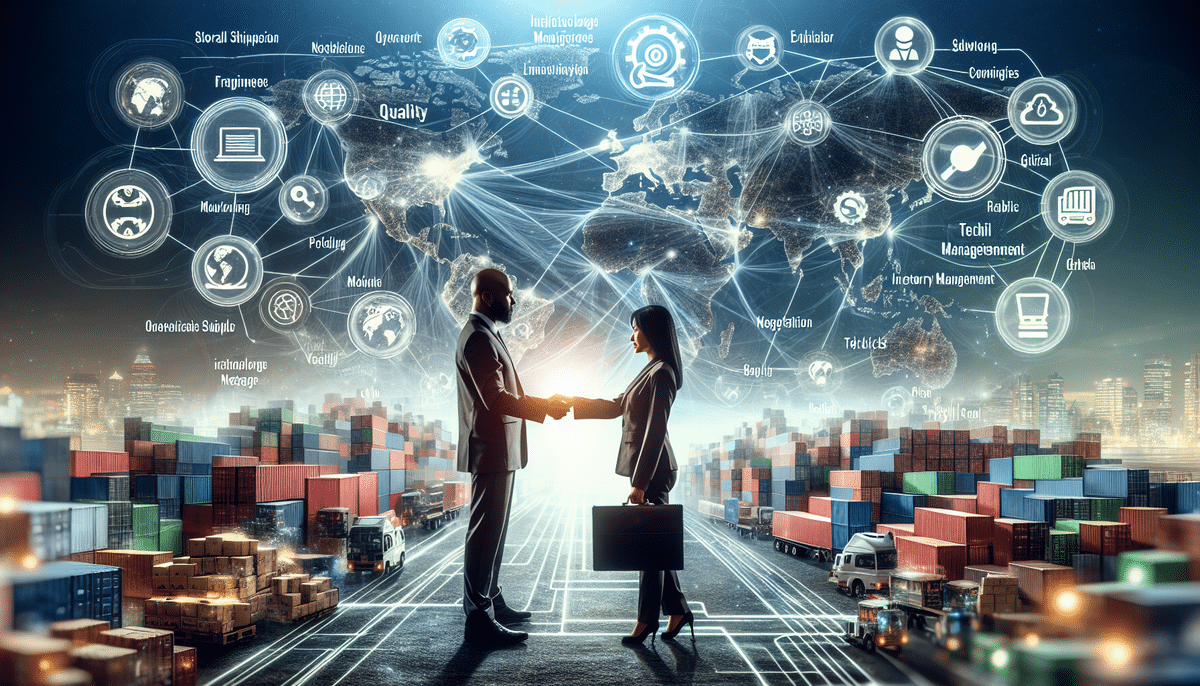
copyright by ShipScience CC BY-NC
Limitations of Direct-to-Consumer Approaches
While D2C models aim to simplify the consumer journey, they often face logistical and operational hurdles. Not only does this require substantial investment in infrastructure, but it also risks inefficiencies that middlemen are designed to prevent. Moreover, the elimination of middlemen doesn’t always result in lower prices or better service.
Middlemen, through their vast networks and experience, ensure that businesses can focus on what they do best—whether it’s manufacturing, content creation, or innovation.
The Honey Scandal: A Case Study
The Honey scandal is an interesting example of the middleman’s evolving role. Honey, a popular coupon-extension service, was accused of profiting unfairly by taking a commission on purchases made through its platform without properly disclosing the source of those earnings. This incident highlighted the ethical issues that can arise with intermediaries, especially when transparency is lacking.
The scandal also emphasizes the importance of maintaining trust between consumers and middlemen. It sheds light on how intermediaries can, at times, overstep their bounds, leading to backlash.
The Relationship Between YouTube and Middlemen
YouTube is a prime example of how the role of the middleman persists, even in digital platforms. YouTube creators depend on advertising and third-party services to monetize their content, illustrating how the platform itself acts as a middleman between creators and advertisers. In a way, YouTube is a contemporary example of the middleman model’s success in a digital economy.
The Honey scandal also ties into YouTube's ecosystem, where advertisers and content creators are constantly competing for visibility and revenue. In this scenario, middlemen like YouTube, as well as ad networks, play a pivotal role in ensuring smooth and profitable exchanges.
The Economic Significance of Middlemen
Middlemen are more than just facilitators—they are crucial for maintaining the flow of goods and services within an economy. They help businesses scale by ensuring that products are delivered in a timely, cost-effective manner while handling regulatory and logistical complexities. Middlemen also provide value-added services such as marketing and customer support, which businesses might struggle to manage alone.
The Efficiency of Middlemen in Business Operations
By managing key functions such as sourcing, distribution, and customer interaction, middlemen create efficiencies that would be difficult to replicate through direct channels alone. For instance, wholesalers can buy in bulk, passing on cost savings to consumers. In return, manufacturers can focus on production, and consumers get access to a wider array of products at competitive prices.
Regulation and the Middleman’s Importance
With the increasing complexity of global markets, regulation plays a crucial role in shaping the behavior and profitability of middlemen. Businesses rely on intermediaries to navigate legal and regulatory challenges. Middlemen help ensure compliance with laws, thus reducing the legal burden on producers and maintaining market stability.
Image suggestion: A flowchart illustrating the regulatory process in global trade with middlemen involved (attribution required).
The Influence of Data and the Middleman’s Power
Data collection is another area where middlemen excel. By aggregating and analyzing data, middlemen can offer valuable insights into consumer behavior and market trends, ultimately optimizing business operations. This data-driven approach enhances decision-making and allows businesses to adjust quickly to market shifts.
The Future of the Middleman in the Economy
Despite the rise of D2C models and the criticism they face, middlemen will continue to play a central role in the economy. As markets grow more complex, businesses will increasingly rely on intermediaries to streamline their operations and navigate new challenges. Additionally, as the digital transformation continues, new opportunities will emerge for middlemen to innovate and adapt to changing needs.
Conclusion
The middleman remains an integral part of the modern economy, balancing the need for efficiency, transparency, and trust. Whether in physical goods distribution or digital content creation, intermediaries ensure that the exchange of goods and services is as smooth and cost-effective as possible. As industries continue to evolve, the role of the middleman will likely adapt, but its importance will not diminish.
By understanding the golden age of the middleman, we can better appreciate their critical function in the global economy and anticipate how they might adapt to future trends.
Comments
Post a Comment