The Truman Show: A Masterpiece of Insightful Storytelling
Introduction: The Power of Fiction in Reflecting Reality
The Truman Show is a cinematic gem that transcends entertainment, offering a deep dive into the human experience, societal constructs, and personal freedom. With its seamless storytelling, richly detailed world-building, and prophetic insights, the movie remains as relevant today as it was upon its release.
This post explores the core themes, symbolic elements, and the striking parallels the film draws with modern society, providing a fresh perspective on why The Truman Show is more than just a movie.
Table of Contents
- Truman’s World: The Illusion of Reality
- Christoph’s Control: A Manufactured Life
- Truman’s Awakening: From Doubt to Resistance
- Modern Society and Its Echoes
- The Final Choice: Breaking Free
1. Truman’s World: The Illusion of Reality
Truman Burbank, the protagonist, believes he leads a normal life on Seahaven Island, unaware that his world is an elaborate set for a reality TV show. The island, encapsulated within a colossal dome, is a fabricated utopia where every person he interacts with is an actor.
2. Christoph’s Control: A Manufactured Life
Christoph, the mastermind behind the show, exerts god-like control over Truman’s environment. From manipulating weather patterns to crafting day and night cycles, he ensures Truman remains oblivious.
- Key Detail: Truman’s fear of water, instilled by Christoph through a staged tragedy, serves as a psychological barrier to leaving the island.
- Product Placement: The show sustains itself financially through in-scene advertising, subtly reinforcing consumerist culture.
3. Truman’s Awakening: From Doubt to Resistance
Truman’s journey begins with small cracks in his reality—a falling stage light, suspicious behaviors of those around him, and inconsistencies in his world. His growing curiosity leads to resistance, despite the obstacles Christoph places in his path.
- Significant Scenes:
- Truman overhearing a radio broadcast accidentally revealing the staged nature of his surroundings.
- His wife, Meryl, unnaturally promoting products, further fueling his doubts.
4. Modern Society and Its Echoes
The Truman Show resonates deeply with today’s social media-driven world. Like Truman, many individuals live under constant scrutiny and performative expectations. Platforms like Instagram and TikTok create curated realities that often blur the line between authenticity and illusion.
Key Parallels
- Reality TV and Social Media: People willingly participate in self-curated broadcasts of their lives, mimicking the show's premise.
- Consumerism: Product placements in the movie mirror modern targeted advertisements that dominate our online spaces.
5. The Final Choice: Breaking Free
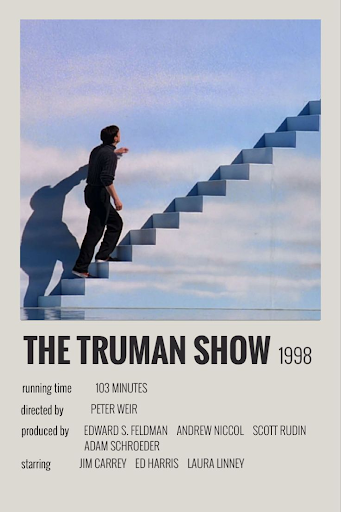
In the climax, Truman defies Christoph’s control, overcoming his deepest fears to escape the dome. His journey to freedom symbolizes the human spirit's resilience and the pursuit of authenticity.
- Truman’s Famous Line: "In case I don’t see you… good afternoon, good evening, and good night."
- This farewell is not only to his artificial world but also to the societal constraints imposed on him.
Conclusion: A Timeless Allegory for Personal Freedom
The Truman Show challenges viewers to reflect on their realities, societal expectations, and the courage it takes to break free from imposed constraints. Its relevance in the age of digital media and curated lives underscores its brilliance as both art and social commentary.
As Truman’s journey inspires us to seek authenticity, it leaves us pondering: How much of our world is real, and how much is shaped by external influences?
Comments
Post a Comment